




In our recent research we analyze how over 420 professionals across the globe are delivering AI projects in production. The findings offer both a reality check and a lesson based roadmap.
The 80-20 Divide in AI Maturity
Only 20% of organizations qualify as “leaders” based on their capabilities across seven key areas: AI leadership/ownership, program standards and policies, governance and oversight, architectural requirements, legal considerations, security standards and data access/use policy. These maturity categories are critical differentiators. Leaders are more than twice as likely to have five or more AI projects running in production compared to non-leaders.
The remaining 80% are still navigating foundational gaps. This 80-20 divide has remained consistent across multiple BARC studies over the past 18 months.
Foundation Before Ambition
It sounds basic, but the message is clear: organizations that invest in foundational work see significantly better results. That includes setting up monitoring frameworks, enforcing security standards, and ensuring cross-functional collaboration between business and IT.
Our recommendation, Build your foundation first. The maturity framework works and continues to correlate with success.
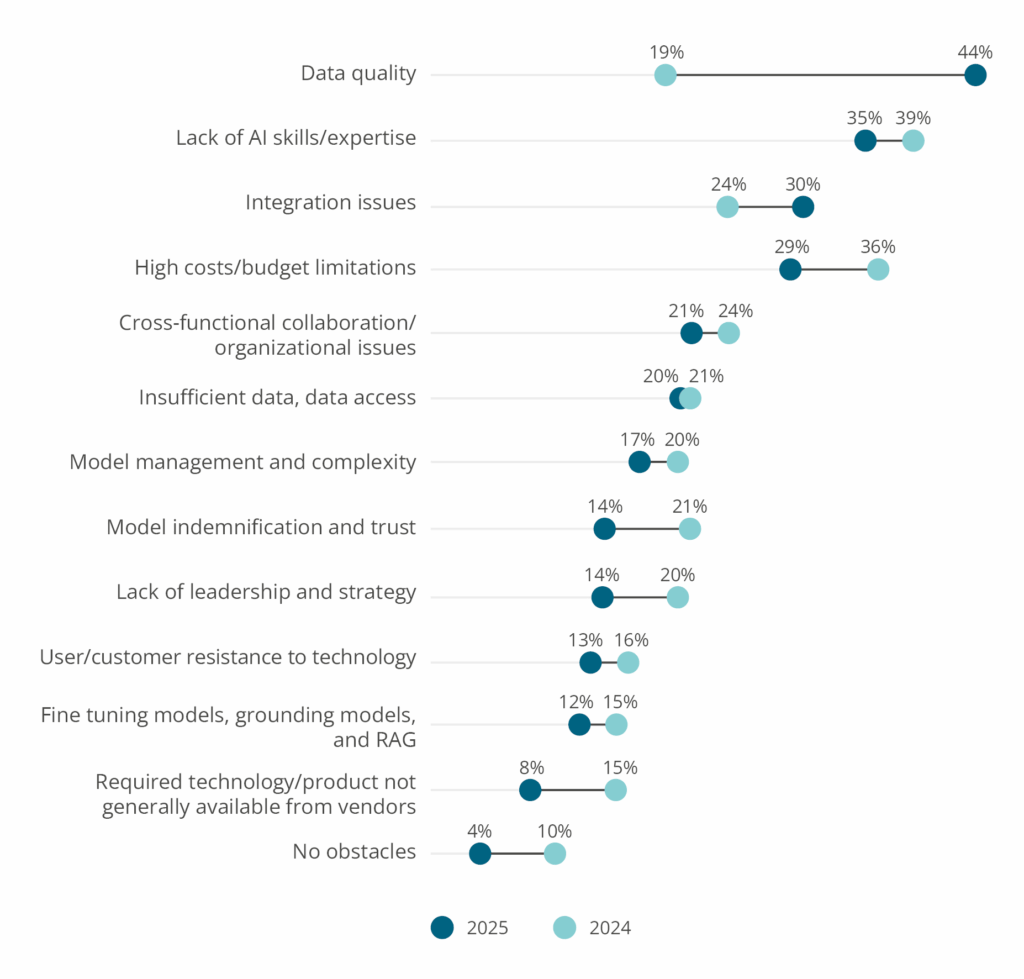
What Obstacles Slowed / Stopped Your Organization from Delivering on Your AI Projects?
Data Quality: The Top Obstacle in Production
Data quality issues once considered manageable in planning stages are now scaling into serious operational risks. In 2024, only 19% of respondents saw data quality as a major concern. That figure jumps to 44% once projects hit production in 2025.
AI systems are relentless. They surface inconsistencies and gaps that were previously buried in manual processes or siloed tools. And those small cracks quickly turn into enterprise-level problems when AI starts scaling.
Organizations need to address data quality proactively before rolling out production AI. It cannot wait.
Cost Surprises and Budget Reality
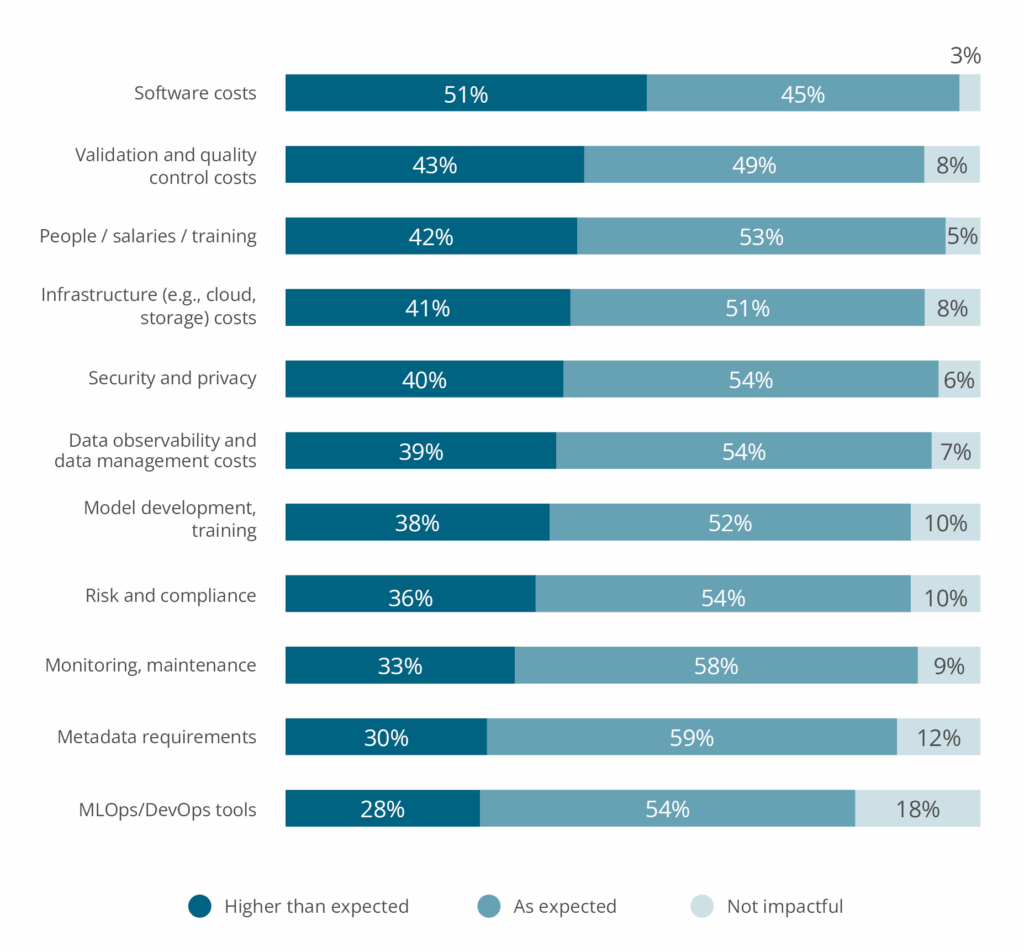
AI isn’t just a technology project. It’s a budget commitment. More than half of respondents say software costs exceed expectations. The biggest cost drivers? Licensing, compute hardware, and skilled personnel.
This is why we urge organizations to re-evaluate cost estimates early and often. Too many still underestimate the full expense of scaling AI.
Internal IT Isn’t Enough
One of the more surprising findings is about satisfaction levels. Internal IT teams receive the lowest ratings of any resource pool when it comes to supporting AI projects. Despite being heavily relied upon, they often struggle to meet expectations.
Leaders increasingly turn to external expertise, particularly consulting firms with deep AI implementation experience. These external teams frequently score significantly higher in satisfaction than global in-house IT departments.
Where Technology Investment Is Headed
While foundational gaps remain, several technology priorities are emerging across leading organizations:
- Data lineage, observability and monitoring (already adopted by 33%)
- Compliance frameworks for regulatory readiness
- Model Context Protocol (MCP), already adopted by 20% despite being brand new
- Data trust frameworks and vector databases
Surprisingly, knowledge graphs see a decline in adoption, suggesting organizations are refocusing on technologies with clearer immediate value.
Your Selected High Cost / Budget Limitations as a Challenge. How Did the Following Costs Impact Your AI Projects?
Final Thought
For organizations committed to making AI a lasting part of their operations, the message from the leading edge is straightforward: Get the basics right. Strengthen your foundations. Budget realistically. And don’t go it alone.
AI success isn’t about building a single great model. It’s about building an environment where great models can thrive.