


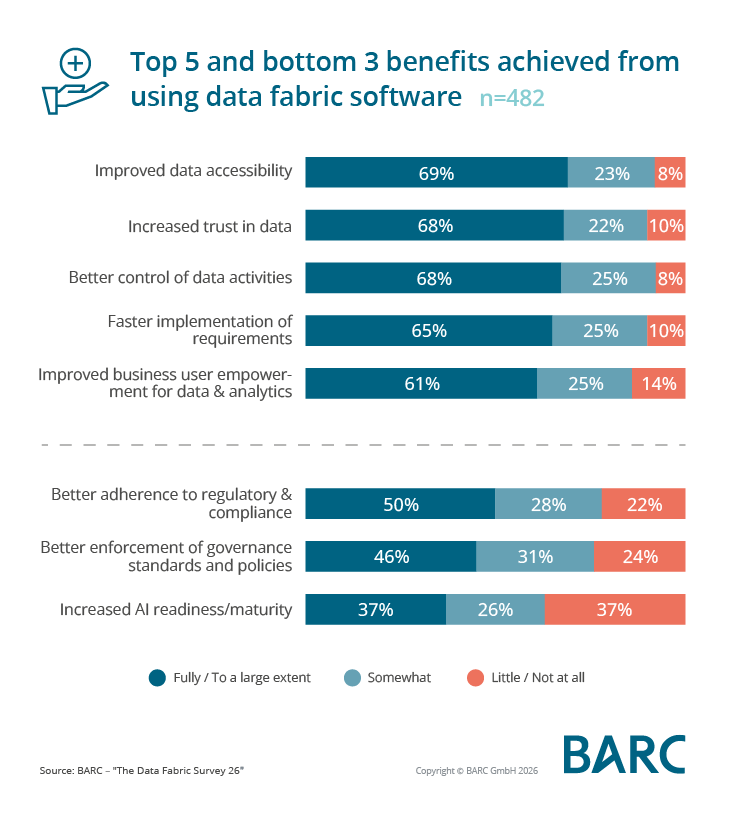
Data fabric software is doing its job on the basics. 69% of users report high or very high benefits for data accessibility. 68% say the same for data control and data trust. Those are strong numbers from “The Data Fabric Survey 26,” published today by BARC. The global survey covers 19 products and draws on feedback from 776 participants.
But AI readiness? That’s where the picture shifts. More than a third of users (36%) see little or no benefit from their current tools when it comes to preparing for AI. The gap between what data management platforms deliver today and what AI, GenAI, and agentic AI use cases require is real, and it shows.
Vendors sell the future. Users buy the present.
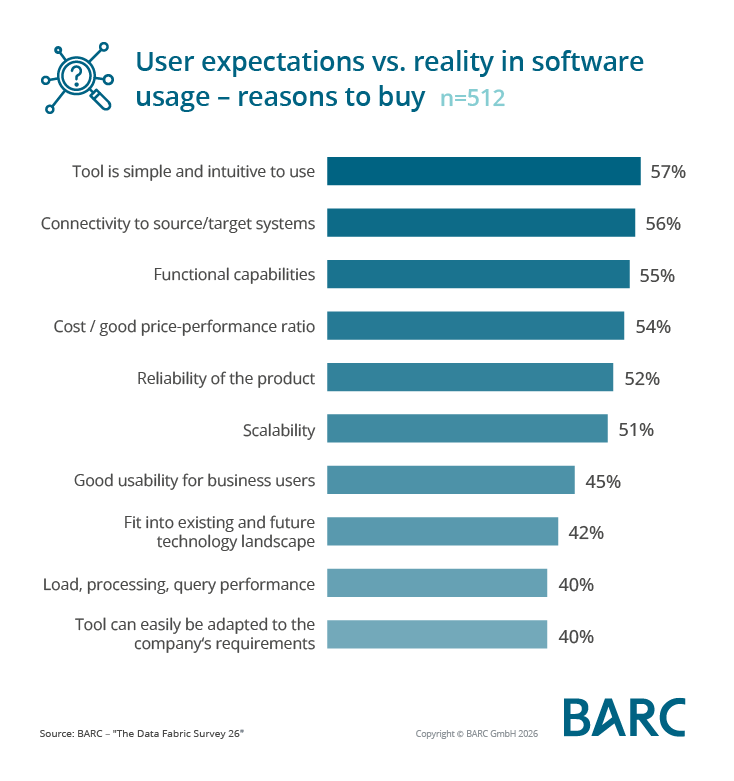
Part of the problem is a disconnect between what vendors promise and what users actually do. Vendors position their products for trending use cases far more often than users deploy them:
- Data products: 51% of vendors vs. 26% of users
- AI/ML: 42% vs. 18%
- Data governance: 41% vs. 25%
On the user side, classic scenarios still dominate: data warehousing and data integration. The AI-heavy use cases vendors are marketing for are not where most organizations spend their time.
Microsoft Fabric, Databricks, and Snowflake lead evaluations
In active software selection processes, Microsoft Fabric is evaluated most frequently (26%), followed by Databricks (21%) and Snowflake (19%).
More users hit problems in practice
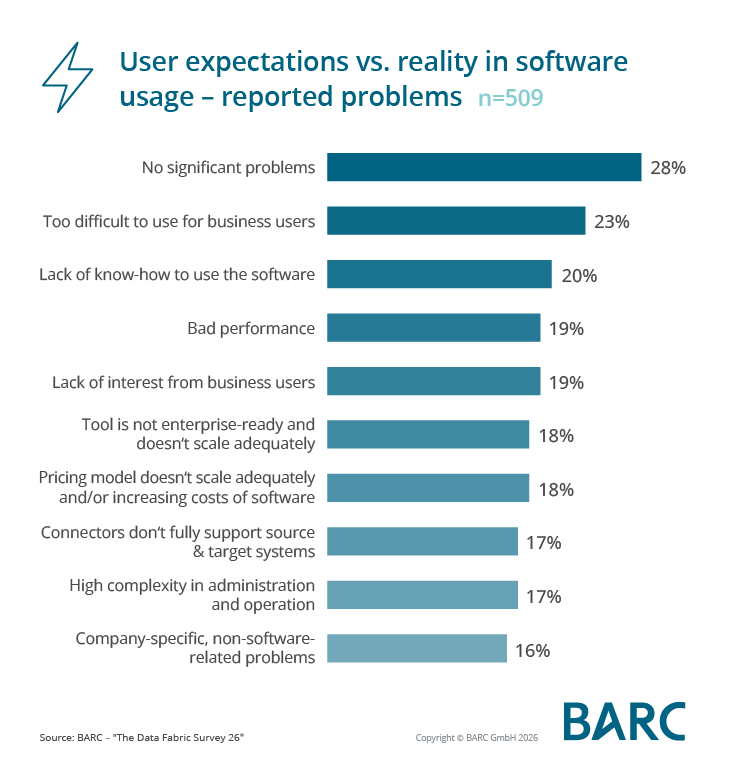
The share of users reporting no significant issues dropped from 40% to 26% compared to the previous edition. The most common pain points: pricing that doesn’t scale or costs too much (19%), poor usability for business users (19%), and high complexity (16%).
Platforms alone won’t get organizations to productive AI
“Many organizations have the platforms, but not yet the prerequisites: data quality, governance, and skills. That is exactly where it will be decided whether GenAI and agents become productive or remain stuck in pilot projects.”, says Timm Grosser, Senior Analyst at BARC.
AI is raising the bar for data management. Capable platforms are table stakes. What separates organizations that move to productive AI from those stuck in pilot mode is the layer above: reliable data quality, governance that works in day-to-day operations, context and knowledge management, and tools business users can work with on their own.
About The Data Fabric Survey 26
The Data Fabric Survey 26 (formerly “The Data Management Survey”) covers 19 products and is based on feedback from 776 participants worldwide.