



dbt Core
What is dbt Core?
Open-source SQL transformation engine for data warehouse modeling with built-in testing, documentation, lineage tracking, and version control.
About dbt Core
Self-description of the vendor
Would you like to find out more about BARC reviews? Our FAQs answer the most important questions.
dbt Core BARC Review & Rating
Provider and product description
In 2016, Fishtown Analytics (now dbt Labs) released dbt Core as an open-source “data build tool” designed to empower analytics engineers who transform data using SQL. Released under the Apache 2.0 license, this community-driven foundation enabled the launch of the commercial variant dbt Cloud in 2018 and the growth of dbt Labs into a company of approximately 1,000 employees. In October 2025, dbt Labs merged with Fivetran, the data integration vendor, with leadership committing to maintain the open-source project. In Q2 2025, dbt Labs introduced the Fusion Engine; a runtime engine that brings significant performance improvements to both Core and Cloud users, though advanced Fusion features are paywalled for Core users while Cloud subscribers receive full access. dbt Core remains the foundational open-source tool, while dbt Cloud has evolved into a distinct commercial SaaS offering with visual interface (Canvas), AI capabilities (Copilot), and managed infrastructure.
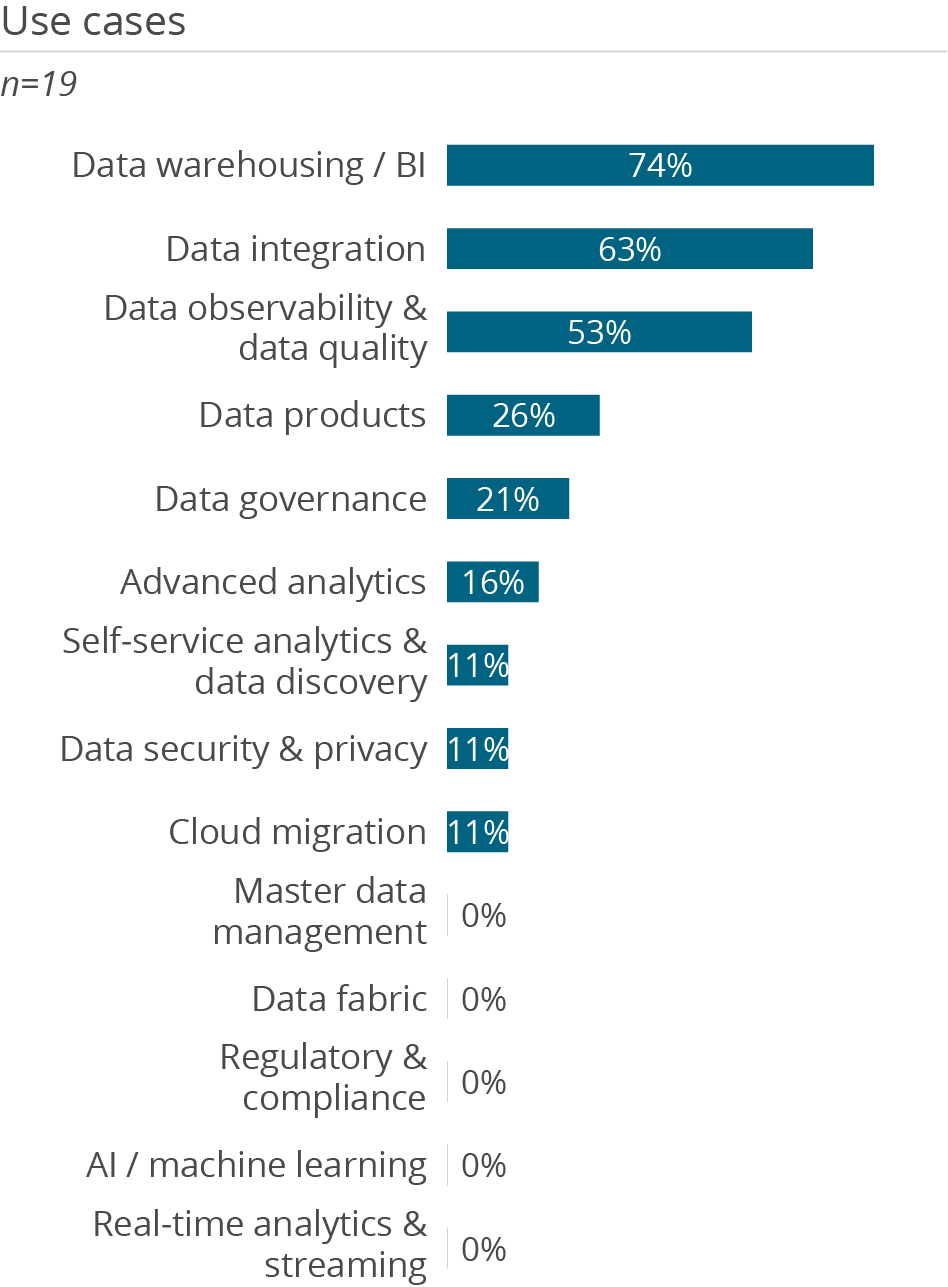
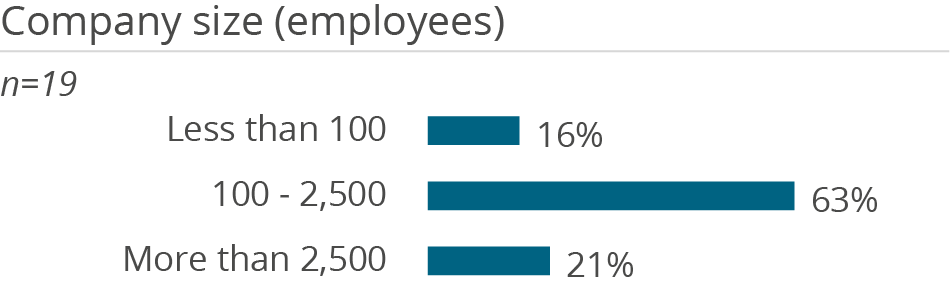
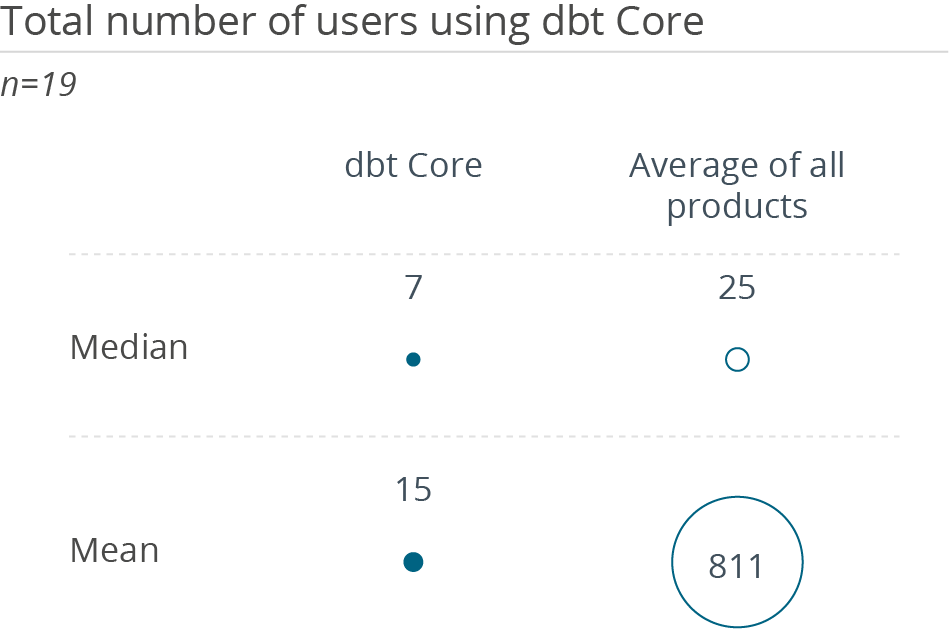
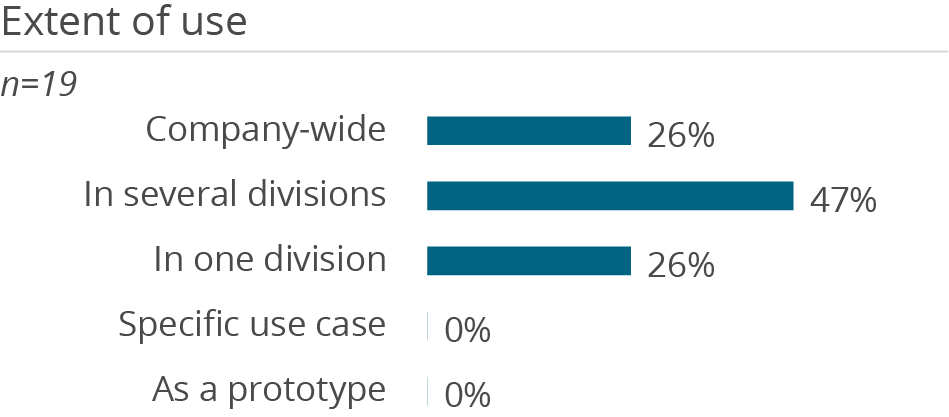
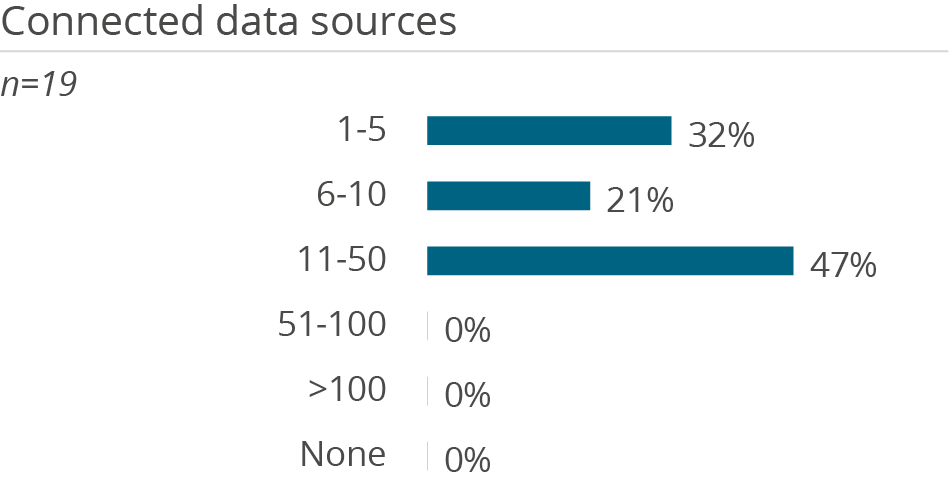
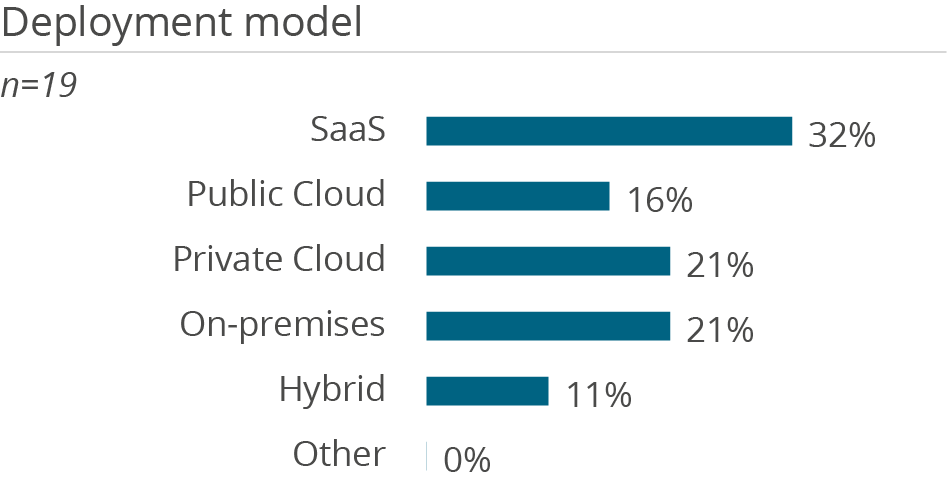
dbt Core enables self-managed deployment for SQL-based data transformations within data warehouses and lakehouses. Survey data shows 74% of users deploy dbt Core for data warehousing and business intelligence, while 63% use it for data integration tasks. Typical deployments are modest: a median of seven users within organizations typically below 2,500 employees, with 74% implementing dbt Core in one or more divisions rather than company-wide. The tool fits naturally into cloud-first modern data stacks, where it applies software engineering best practices such as version control, testing, and documentation to data transformation workflows.
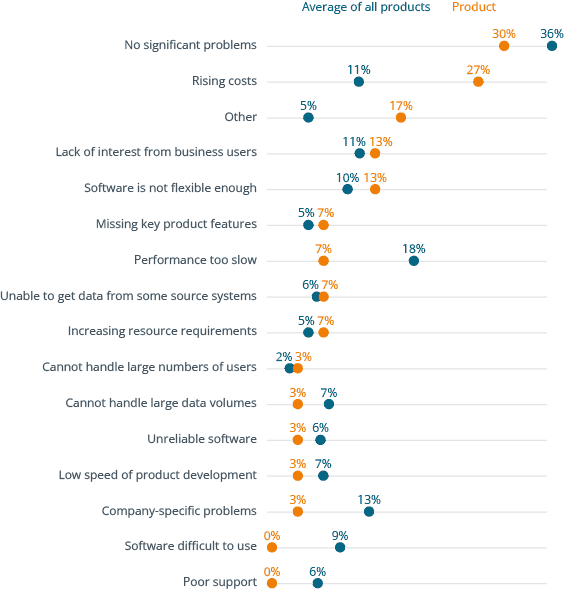
Due to its open-source nature, dbt Core ranks as the Price to Value champion twice across four peer groups in The Data Fabric Survey 26, with 84% of survey respondents citing its price-to-value ratio as a key reason to choose the tool. But not every open-source product is that successful. Its strengths are rather in the product’s adaptability: 37% cite the ability to customize dbt Core to company requirements versus a survey average of just 14%. Available tool know-how also scores remarkably high at 37% versus 18% on average, demonstrating widespread adoption and robust community support within specific technical circles. Technology landscape fit motivates 53% of users, confirming dbt Core’s seamless integration into modern data architectures. Performance on core product KPIs remains mid-field (e.g., for Product Satisfaction, Performance, and Scalability). The open-source flexibility comes with trade-offs: 37% cite missing functionality versus an average of 14% across all products in this survey.
dbt Core suits especially cloud-native organizations with fewer than 2,500 employees with technical, SQL-proficient teams implementing data transformation workflows. Organizations prioritizing flexibility, community support, and price-performance over vendor handholding will find dbt Core compelling.
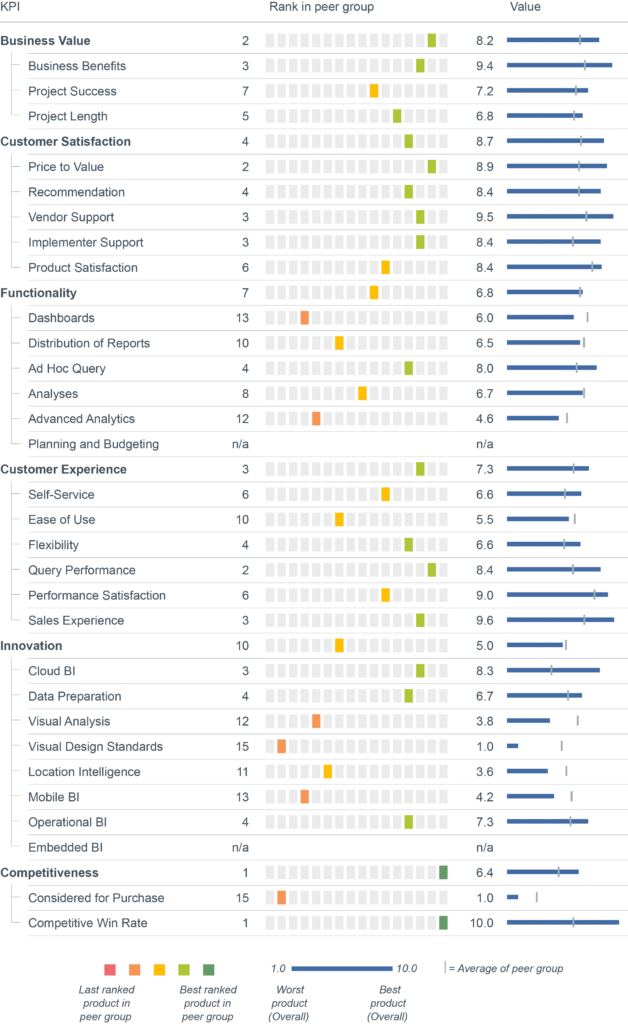
However, success requires organizational discipline and internal expertise: survey respondents report below-average satisfaction with Project Success and Project Length, and 26% cite company-specific implementation challenges versus 15% on average. What appears straightforward for small teams demands operational rigor at scale. dbt Core is not ideal for enterprises requiring company-wide governance, comprehensive vendor support, or plug-and-play solutions. Strategic uncertainty clouds the future: the post-merger Fivetran and dbt Labs entity has pledged continued open-source investment, but the commitment needs to be proven. Organizations needing enterprise capabilities should evaluate dbt Cloud for its visual interface, AI assistance, and managed infrastructure, or consider data warehouse automation tools offering comprehensive vendor enablement. For self-sufficient, cloud-first teams willing to invest in the DataOps discipline, dbt Core’s open-source DNA remains a powerful foundation.
Strengths and challenges of dbt Core
BARC’s viewpoint on the product’s strengths and challenges.
Strengths
- Excellent price-performance: Top-ranked twice for Price to Value across peer groups as a free, open-source tool.
- Widespread use: Widespread adoption means 37% cite available tool know-how versus the survey average of 18%, demonstrating robust community resources and showing how widespread dbt Core/Cloud is used across the data teams within our panel and beyond.
- Ecosystem integration in modern data stacks: Strong fit into cloud data warehouse and lakehouse environments. Exceptional adaptability (37% vs. 14% average) enables customization to specific company requirements, making it highly flexible for diverse technical environments.
Challenges
- Project success and implementation discipline required: Below-average performance on Project Length and Project Success KPIs indicates implementation challenges that require careful management.
- Missing enterprise features: 37% report missing key functionality versus 14% survey average, reflecting open-source scope limitations compared to commercial alternatives. Some of the major 2025 updates are exclusive to dbt Cloud.
- Limited vendor support and enablement: Key User Support KPI ranks very low; 32% lack know-how to use software versus 19% average due to absence of vendor training and enablement.
dbt Core User Reviews & Experiences
The information contained in this section is based on user feedback and actual experience with dbt Core.
The information and figures are largely drawn from BARC’s The BI & Analytics Survey, The Planning Survey, The Financial Consolidation Survey and The Data Management Survey. You can find out more about these surveys by clicking on the relevant links.
Who uses dbt Core in a data management context and how
Why users buy dbt Core and what problems they have using it

- Get independent information on software solutions, market developments and trends in data, analytics, business intelligence, data science and corporate performance management.
- Make data & analytics decisions based on numbers, data, facts and expert knowledge
- Access to all premium articles and all our research, including all software comparison studies, scores and surveys.
- Unlimited access to the BARC media library
- Consume unlimited content anywhere
Full user reviews and KPI results for dbt Core
All key figures for dbt Core at a glance.
- Get independent information on software solutions, market developments and trends in data, analytics, business intelligence, data science and corporate performance management.
- Make data & analytics decisions based on numbers, data, facts and expert knowledge
- Access to all premium articles and all our research, including all software comparison studies, scores and surveys.
- Unlimited access to the BARC media library
- Consume unlimited content anywhere