Workforce planning has shifted from a budgeting task to a strategic capability, directly linking labor decisions to revenue and growth. In volatile markets, this makes it a key differentiator between high-performing organizations and laggards.
For many organizations, workforce planning was once a relatively narrow exercise within the annual budgeting process. Finance teams tracked headcount in spreadsheets, updated labor assumptions during the budget cycle, and revisited staffing plans only when costs drifted materially off target. In that environment, workforce planning was largely about controlling payroll expense.
Today, that view is rapidly changing. Labor is one of the largest and most complex cost drivers in most organizations, often representing a substantial share of operating expenses. At the same time, shifting economic conditions, evolving business models, and persistent talent shortages are forcing organizations to rethink how workforce decisions connect to performance.
As a result, workforce planning is moving from a budgeting activity to a strategic capability. Modern FP&A teams increasingly model workforce capacity, skills, hiring timing, and productivity as drivers of revenue, growth, and operational execution. In doing so, workforce planning is becoming an essential bridge between financial planning, operational strategy, and organizational performance.
This shift is visible in how organizations are designing their planning models. In many corporate performance management (CPM) implementations, workforce and headcount planning models have become highly customized to reflect each organization’s operating structure, talent mix, and growth strategy.
Headcount Planning Versus Workforce Planning
While the terms are often used interchangeably, there are some slight differences. Headcount planning is primarily about how many people an organization plans to employ and what they will cost. Headcount planning typically focuses on:
Number of employees by department
Hiring and termination timing
Salary, bonuses, benefits, and budgets
Budget versus actual headcount
Variance analysis
Headcount planning is largely finance-driven and cost-oriented. Headcount planning models/solutions are often integrated with dedicated human resources (HR) platforms. They let financial planning & analysis (FP&A) teams ask the data questions like:
How many full-time employees (FTEs) can we afford?
What is the payroll impact of adding 20 new roles?
Are we over or under budget on labor costs?
The trend among many of the use cases I worked on was organizations experiencing rapid growth (some of whom were venture-backed) needing to balance fueling growth with personnel needs and cash flow/access to capital.
Workforce planning is more than just headcount. It incorporates capabilities, capacity, and skills alignment. It typically includes:
Role and skill requirements
Capacity modeling tied to revenue or output
Productivity ramp assumptions
Attrition risk and succession considerations
Scenario modeling for restructuring or expansion
Alignment with strategic initiatives
A workforce planning model lets senior management (not just the FP&A team) ask questions such as:
Do we have the right skills to execute our strategy?
How does our hiring pace affect revenue growth?
What happens if attrition rises by five percent?
Can we redeploy talent instead of hiring externally?
Take the example of a professional services firm. It will have team members with different skill sets, billed out at different rates. Workforce planning enables the organization to see how changes to personnel impact revenue. On a granular level, the organization can even look at on-site utilization and non-billable hours, such as travel. Proximity to clients can materially reduce non-billable time and improve utilization.
Workforce Planning in Volatile Markets
In Resilient Planning in Volatile Markets from my BARC colleagues Dr. Christian Fuchs and Robert Tischler, more than 70% of organizations report that external factors such as economic conditions, geopolitical developments, and shifting customer behavior have a disruptive influence on strategy and operations. In this environment, static assumptions around labor costs quickly become outdated.
At the same time, labor frequently represents 40 to 70% of operating expenses. According to the U.S. Bureau of Labor Statistics, wages and salaries account for over 70% of total employer compensation costs, underscoring how labor dominates the cost structure in many organizations. Even modest changes in hiring pace, attrition, or compensation can materially affect profitability and cash flow within a single forecast cycle.
Workforce planning is no longer a budgeting add-on. It is a defining capability of modern FP&A.
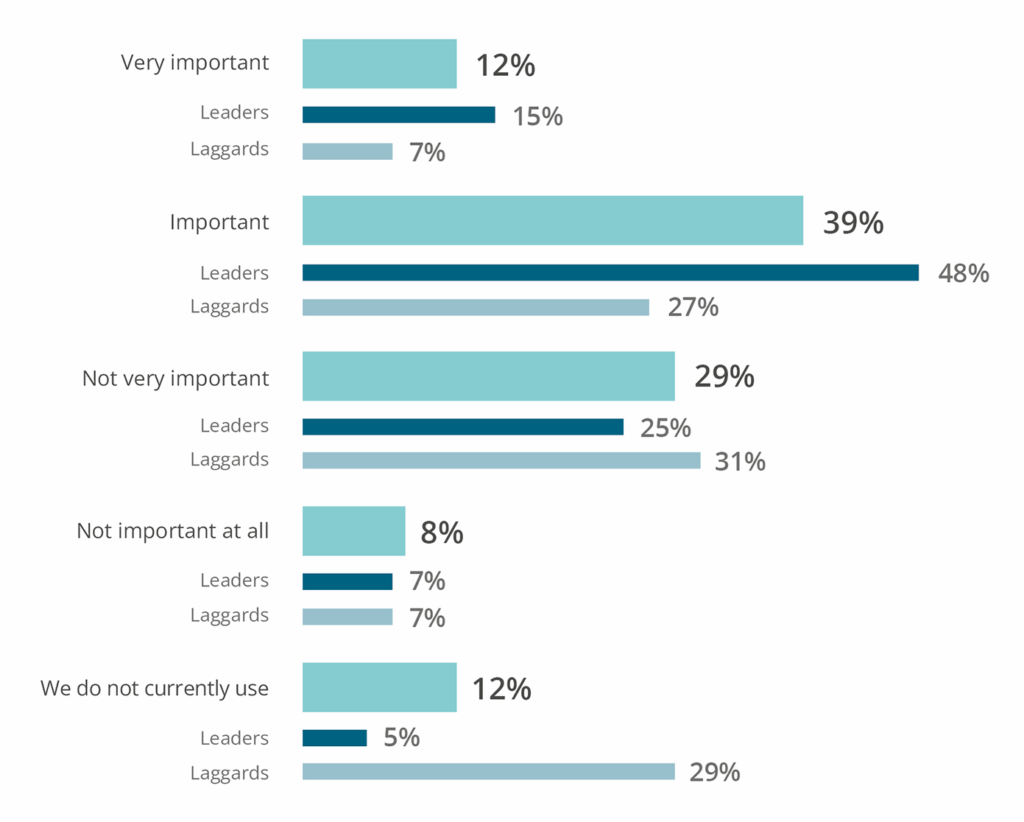
While 51% of organizations report regularly using simulations and scenario analyses (in overall corporate planning), the intensity and impact of use differ sharply between performance groups.
Among Leaders, defined as the top 10% of organizations based on business benefits achieved, 63% consider scenario planning essential. By contrast, 67% of Laggards do not.
How important are simulations and scenario analysis for your corporate management and decision support to prepare for future situations? By leaders vs. laggards
Figure 1: How important are simulations and scenario analysis for your corporate management and decision support to prepare for future situations? By leaders vs. laggards; n=246; Source: BARC Research Study “Resilient Planning in Volatile Markets“
This divergence has direct implications for workforce planning.
Leaders are significantly more likely to:
Reforecast headcount assumptions frequently
Model hiring and attrition as drivers, not fixed inputs
Run structured what-if scenarios on hiring freezes or investment acceleration
Align workforce capacity directly to strategic priorities
Laggards, by comparison, often rely on static headcount budgets updated infrequently, limiting their ability to respond when market conditions shift. Or, as mentioned above, they often focus on the subset of headcount planning versus the larger, more strategic approach to workforce planning.
In volatile markets, the ability to dynamically model workforce decisions is emerging as a key differentiator.
Workforce Planning as a Maturity Signal
Across BARC research, high-performing organizations consistently demonstrate stronger integration between financial and operational planning.
The CPM Trend Monitor 2026 reinforces that data-driven and integrated planning are among the top priorities for modern finance teams. Leaders treat data as a strategic asset and embed operational drivers directly into financial models.
Navigating economic volatility while pressured to improve efficiency and decision quality?
See the strategic priorities of 989 finance leaders. The CPM Trend Monitor 2026 reveals what best-in-class companies are doing to improve decision quality right now.
Kelley Lynn Kassa is a seasoned marketing executive specializing in Corporate Performance Management, with more than 20 years of experience in marketing and communications in software and advisory services. She has held key roles at Applix, IBM, Varicent, and Datawatch, and BPM Partners, and for the past 13 years has provided marketing thought leadership content and programs for Revelwood—an implementation partner for IBM Planning Analytics, Workday Adaptive Planning, BlackLine, and Incorta.
An accomplished writer, Kelley has contributed to MIT Sloan Executive Education’s Innovation at Work blog, Foodies of New England magazine, and a wide range of clients over the years. She is recognized for her ability to translate technical detail into big-picture stories and turn complex data into clear, actionable insights.
Beyond her professional work, Kelley has held volunteer leadership roles with several community organizations, including the Irish Immigration Center and the Charitable Irish Society. She is also an active rower, coxswain, and coach at Community Rowing, Inc.
Our newsletter is your source for the latest developments in data, analytics, and AI!