




What happened?
- Neo launched out of stealth on July 20, 2026 with $100M in total funding.
- The round splits into a $75M Series A co-led by Andreessen Horowitz and Bessemer Venture Partners, and a previously undisclosed $25M seed. Craft Ventures and Merlin Ventures also participated.
- Neo is a Boston-based, American-Israeli company founded by security veterans from SentinelOne, Wiz and Palo Alto Networks: Nick Warner (CEO), Shlomi Salem (CPO) and Eran Shirazi (CTO).
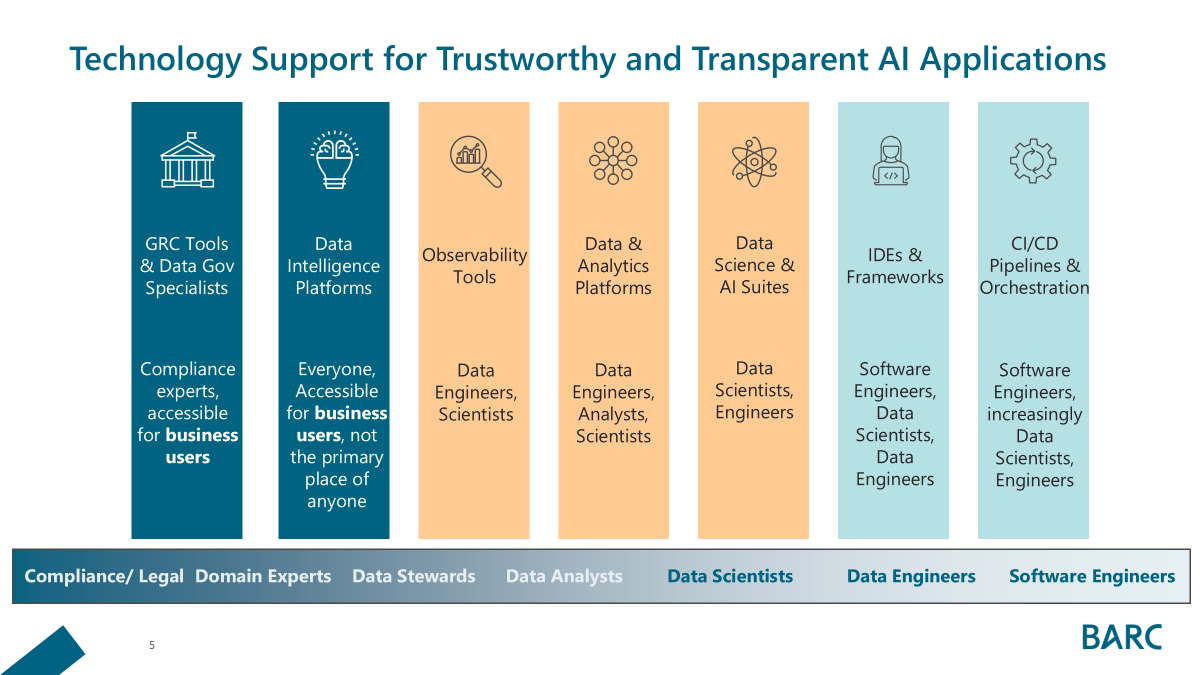
- The product is a real-time control layer that inventories, attributes and governs AI agents, agentic software, AI-enabled apps, browsers and identities.
Why is it important?
- Governance of agentic AI is shifting from a research topic to a funded product category.
- Capital is moving to the layer beneath the model. Security, control and governance, not the models themselves (see also our blog).
- A $100M raise straight out of stealth signals investor conviction that enterprises will need dedicated tooling to see and control autonomous agents at scale.
- Regulation is adding urgency. Ongoing discussions across Europe, driven by the EU AI Act and its next update on August 2, 2026, mean companies will increasingly be forced to govern AI outcomes and agents, creating demand for support in both organization and technology.
- The logic echoes recent governance-driven data platform M&A, such as the acquisition of Informatica by Salesforce and SAP’s acquisition of Reltio and Dremio, now applied one level up at the agent layer.
What’s interesting about it?
- Although Neo markets itself with a security-operations story, its real relevance is governance: controlling AI agents, attributing their actions and enforcing policies on them.
- The founding team’s pedigree points to an endpoint and identity security playbook repurposed for AI agents, which differs from most other AI governance vendors that come from a GRC, data governance or ML Ops background.
- The “control tower for AI agents” concept overlaps with the emerging AI governance platform market defined around governance, inspection and enforcement.
- Open question: does agent governance become a standalone category, or a feature absorbed by security, identity and data governance incumbents?
- Zooming out, Neo rides a broader funding wave in AI and agent governance that BARC has been tracking across Europe and the U.S.:
- Europe, regulation-driven: NeuralTrust (Barcelona) raised a $20M seed, reportedly Europe’s largest cybersecurity seed, to discover, monitor and secure AI agents; NAAIA (Paris) closed a €6M Series A for EU AI Act-focused AI governance; and Coalex.ai (Lisbon) took angel funding for a “decision firewall” aligned to the EU AI Act and DORA.
- German GRC newcomers: Munich-based Auxilius (€1.3M pre-seed) and Bayshore ($8M seed) turn AI compliance rules into code.
- Established and adjacent players: Holistic AI ($80M) scales an AI governance platform, Patronus AI ($50M Series B) builds AI evaluation, security and guardrails, and Berlin’s Camunda, a company widely tipped as a future unicorn that has crossed $100M ARR, is repositioning around agentic orchestration with built-in governance and control.
- Taken together, these deals show agent and AI governance hardening into a distinct, well-funded segment on both sides of the Atlantic, with a pronounced, regulation-driven European cluster.
Implications for customers
- Start by defining your requirements. This market is still highly dynamic, and your specific problem may already be solvable with software you already have in house.
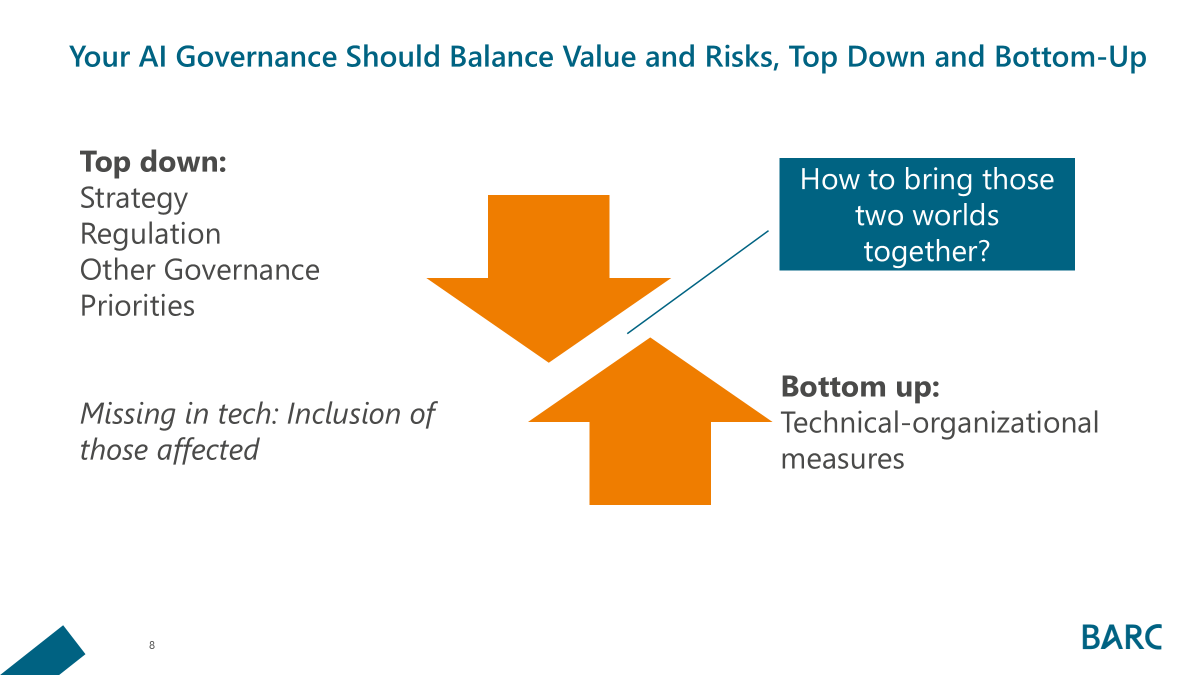
- Balance Neo’s bottom-up perspective with a top-down one: how do you set up AI risk management across the firm, and how do you keep a governance-driven register of agents and AI systems tied to risk and regulatory obligations, rather than just an auto-discovered technical inventory? That is the other side of the coin, and one Neo does not appear to have bet on.
- Enterprises scaling agentic AI gain an early option for agent inventory and control, but at a pre-maturity stage.
- The category is young. Expect rapid feature change and real consolidation risk.
- Buyers should test how Neo attributes and enforces policy across apps, browsers and identities before committing.
- Check for overlap with existing security, IAM and data governance investments to avoid duplicate tooling.
Analyst quotes
“Regulation is one of the forces funding this market right now. In our own research, security of AI systems and regulatory compliance already top the responsible-AI priority list, and Neo’s $100M is a bet that buyers will pay to act on that.”
Alexander Seeliger, Analyst, BARC
“Funding governance this heavily is a sign the market is maturing. Our surveys keep showing agent adoption outrunning governance maturity, and closing that gap is precisely the market Neo is chasing.”
Alexander Seeliger, Analyst, BARC
“AI governance is about running trustworthy and secure AI applications, and it reaches across the whole organization. The board holds the mandate for enterprise risk management, while the security engineer hardens and monitors those applications and their infrastructure at runtime. Neo sits firmly at that runtime end, with a heavy application- and infrastructure-level focus. Buyers should be careful not to lose sight of the data governance and risk management aspects.”
Florian Bigelmaier, Analyst, BARC
BARC’s view
Neo’s raise confirms that the control layer for agentic AI is becoming an investable category, not just a governance talking point. The strategy is credible: a security-grade team applying inventory, attribution and enforcement to a fast-growing population of autonomous agents that most enterprises cannot yet see. The risk is definitional, because agent governance sits at the intersection of security, identity, ML Ops and data governance, and incumbents across all of them will move to claim it.