SWOT
What is SWOT?
Software solutions for digitizing controlling processes in midsize companies, offering capabilities for financial and operational planning, budgeting and forecasting, reporting, analysis and financial consolidation.
Self-description of SWOT
The Solution for Integrated Corporate Planning
Integrated Financial Planning
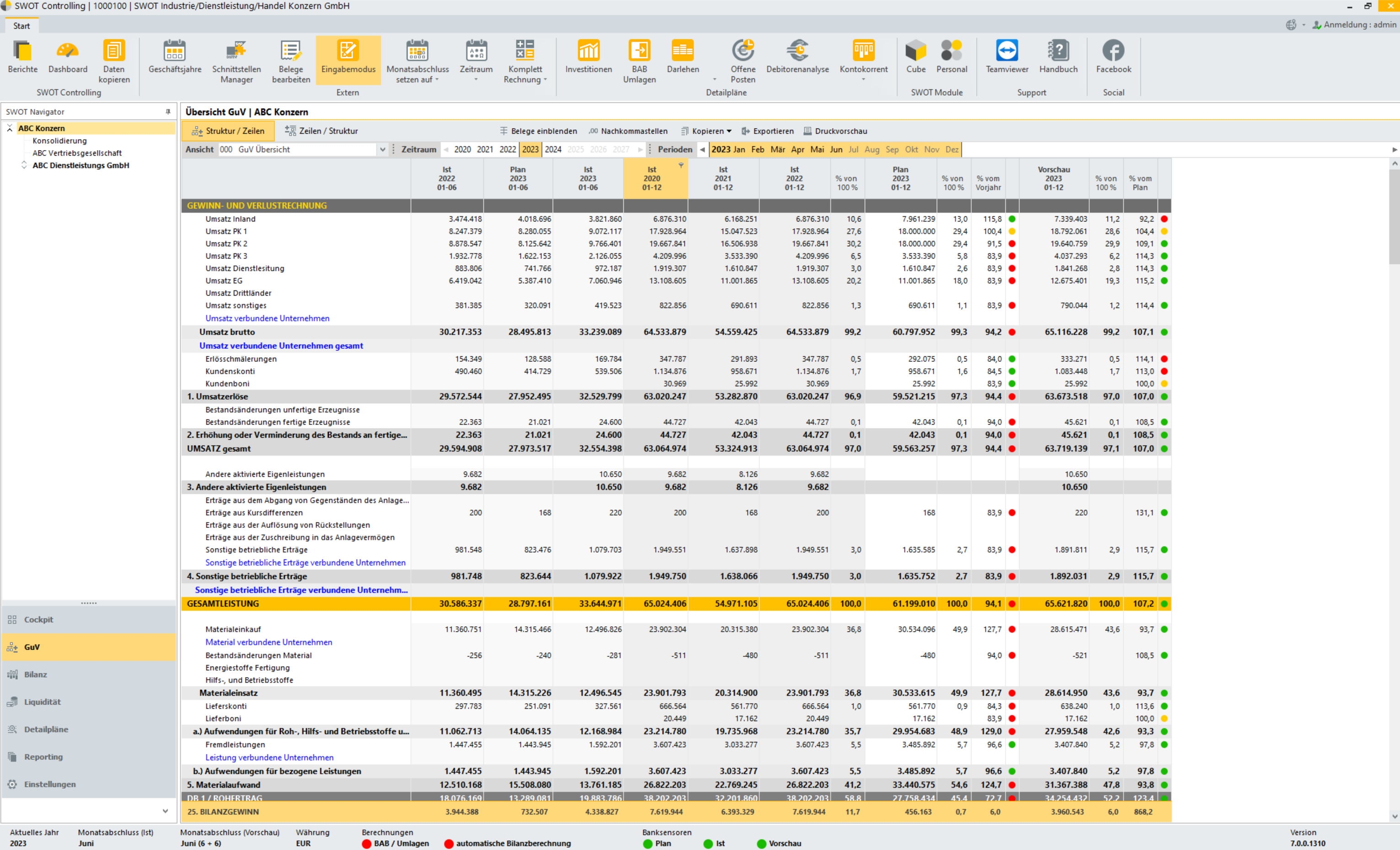
SWOT integrates revenue and expense planning from all areas of the income statement (P&L) into the balance sheet and short-term liquidity forecast.
- Flexible customization (P&L/balance sheet) according to German GAAP (HGB)
- Interfaces to accounting, cost accounting, ERP, and HR systems
- Multi-year planning (top-down/bottom-up), investment and loan planning, detailed personnel cost planning by employee, allocations, provisions, and much more
Operational Planning
With SWOT QVANTUM, you can flexibly analyze and plan items such as product costs, personnel costs, or sales analyses across various dimensions. Preconfigured models for personnel, overhead, or investment planning can be individually adapted.
Liquidity & Cash Flow
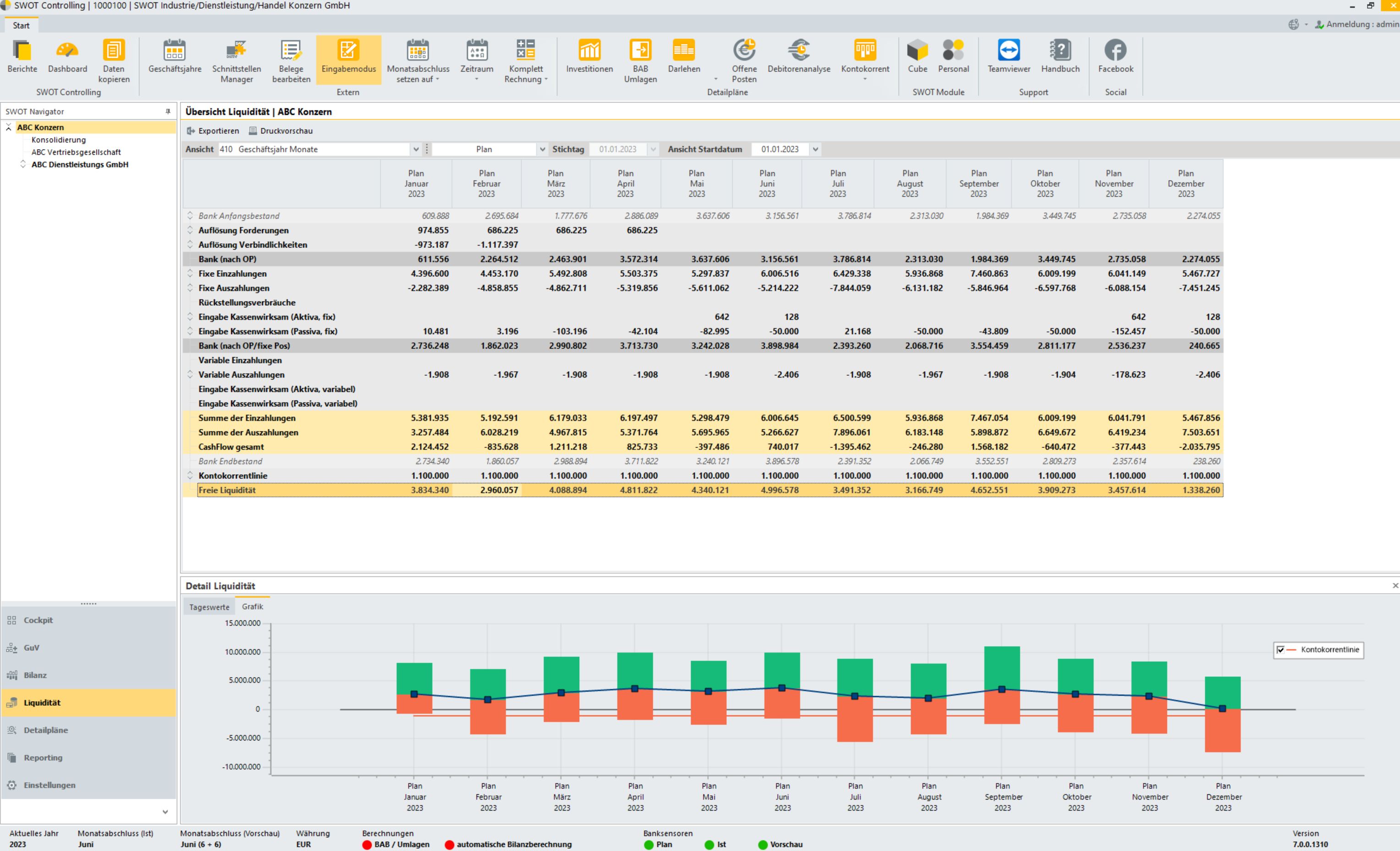
SWOT links budget items (e.g., loans, leasing, salaries) with daily liquidity updates. Receivables and payables are resolved by due date, and liquidity trends are visible on a daily and weekly basis.
Consolidation
SWOT offers management and legal consolidation in accordance with HGB/IFRS or group-specific requirements. Internal interdependencies can be eliminated and transparently tracked.
Reporting
Reports can be freely defined. SWOT provides KPIs including HGB & covenant templates, as well as:
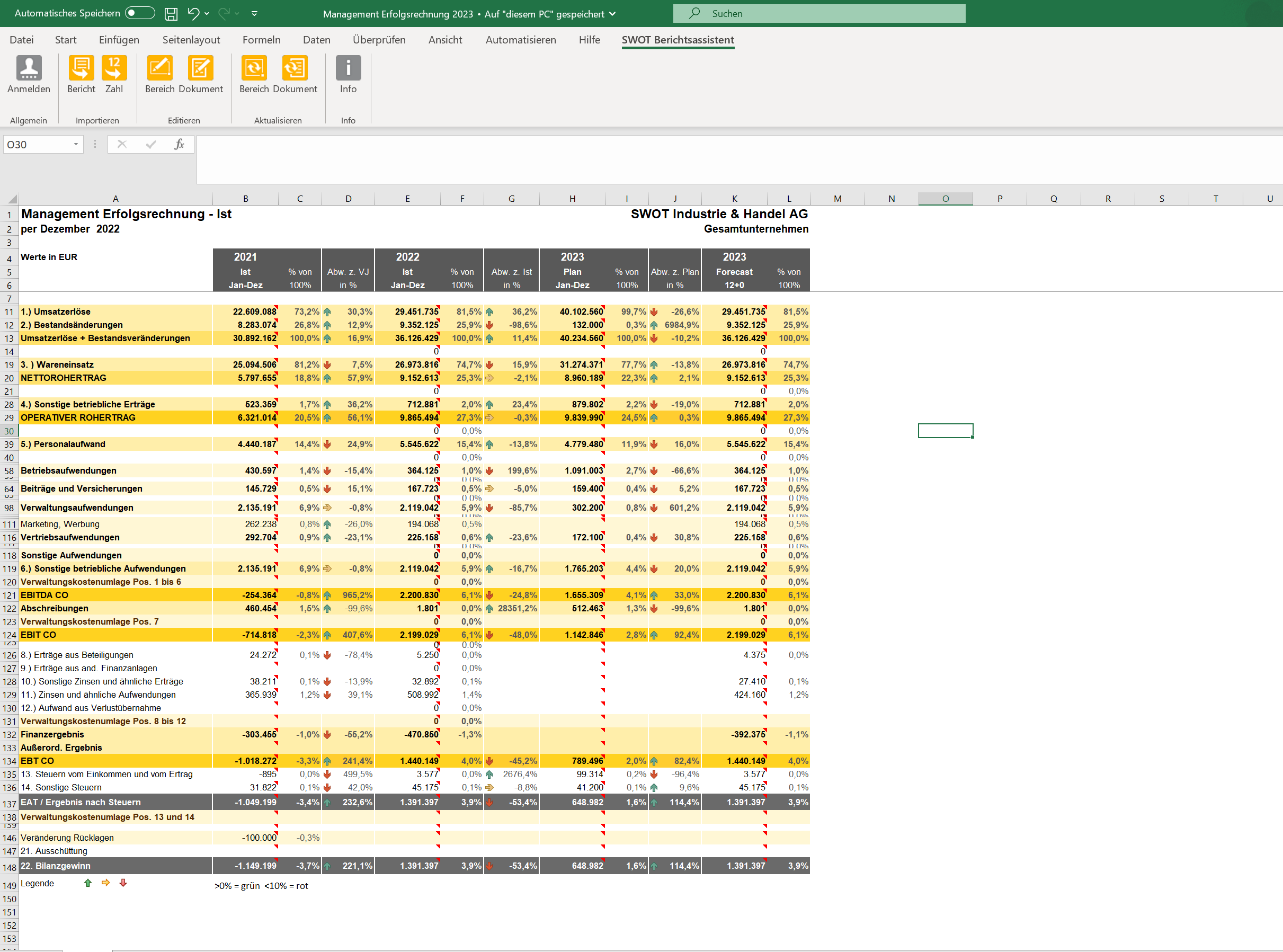
- MS Office add-in for easy data updates
- Web reporting with SSRS for real-time data and drill-downs
- SWOT Power BI connector for interactive mobile analysis
Cloud Security
Hosting takes place in the data center of the German parent company Buhl Data Service – ensuring maximum control, data protection, and operational security.
About SWOT
For over 25 years, SWOT has supported medium-sized businesses with advanced controlling. The solution offers 100+ interfaces to upstream systems and automates processes for CFOs and controllers – enabling reliable reporting, stable liquidity, and efficient management.
Would you like to find out more about BARC reviews? Our FAQs answer the most important questions.
SWOT BARC Review & Rating
This section contains our independent analyst views on SWOT.
Provider and product description
SWOT Controlling was founded in 1997 and has been active in the corporate performance management market for almost 30 years. Headquartered in Berlin (Germany), the company is part of the Buhl Data Group. With a team of more than 20 employees, SWOT Controlling develops and markets software for integrated corporate planning, covering financial planning and analysis (FP&A), operational planning (xP&A), liquidity and cash flow planning, group consolidation, and management reporting. The vendor focuses primarily on the German-speaking DACH region and currently serves approximately 300 customers, the majority of which are mid-sized companies.
SWOT Controlling offers two complementary solutions: SWOT One and SWOT Qvantum. SWOT One is primarily designed for financial planning, covering integrated planning of the balance sheet, profit and loss statement, and cash flow, including short-term (weekly) liquidity forecasting. SWOT Qvantum is positioned for operational and extended planning use cases, offering a highly flexible, individual, and workflow-based planning environment suitable for a wide range of departmental and cross-functional planning scenarios. Both products are also available as standalone solutions but are increasingly positioned together as an integrated suite. A dedicated interface allows data to be transferred from SWOT Qvantum to SWOT One either on demand or on a scheduled basis, enabling tightly integrated financial and operational planning.
SWOT Controlling targets finance and controlling departments in mid-sized companies, with a typical deployment of 20 to 50 users. The vendor serves customers across various industries; while its solutions are fundamentally industry-agnostic, it has a particular focus on the social economy sector. Sales are conducted both directly and indirectly through a small network of partners, which includes content-oriented partners, software houses, and management consultancies. The licensing model is subscription-based with concurrent user pricing.
SWOT One is built on a three-tier architecture consisting of a Microsoft SQL Server database, an application server, and client components. The solution is available on premises as well as hosted – either in a Buhl data center or on any other infrastructure chosen by the customer. End users can access the applications via an installed desktop client or a Microsoft Excel add-in. The Excel add-in supports read access only (e.g., for reporting purposes). For data integration, SWOT Controlling provides its own data integration module with more than 200 predefined connectors, enabling connectivity to a broad range of source systems and ERP platforms.
SWOT One supports financial planning, operational planning, and strategic planning on a single platform. At the core of its operational planning functionality is a multidimensional data model based on flexible dimensions and hierarchies, enabling individual and detailed planning structures to be configured for a variety of business requirements. The vendor provides predefined planning content for several topics and industries, including personnel cost planning, investment planning and depreciation, financing, provisions, sales planning, and allocation logic. Data distribution across periods, cost centers, or other dimensions is supported via configurable distribution keys. Rolling forecasting is natively supported, and the platform enables simulations based on multiple planning scenarios.
For reporting and analysis, SWOT One offers multiple access paths. The SWOT Report Generator, based on Microsoft SQL Server Reporting Services (SSRS), provides a template-based environment for defining formatted reports and KPI analyses. SWOT Web Reporting extends this capability through integration with Microsoft Power BI, supported by a dedicated Power BI connector. The Microsoft Excel add-in offers a familiar interface for formatted reporting. For ad hoc queries and multidimensional OLAP analyses, SWOT Cube is available, enabling self-service analytics on planning and actuals data.
SWOT One includes dedicated functionality for group consolidation, covering both legal consolidation in accordance with HGB and management consolidation. This positions SWOT One as an integrated solution for mid-sized company groups requiring both operational financial planning and statutory consolidation within a single platform.

Strengths and challenges of SWOT
BARC’s viewpoint on the product’s strengths and challenges.
Strengths
- SWOT One as an integrated platform for financial planning covering the full planning cycle – from strategic planning and budgeting to rolling forecasting – including deep liquidity and cash flow planning down to weekly level.
- Two-product suite (SWOT One and SWOT Qvantum) addressing both financial and operational planning, with a dedicated integration interface enabling a connected FP&A and xP&A approach.
- Predefined planning content as well as industry-specific models, allowing for fast and structured project implementation.
- Data integration capabilities via a dedicated module with more than 200 predefined connectors, facilitating connectivity to a wide range of ERP and source systems commonly used in the mid-market.
Challenges
- Small, regionally focused specialist vendor with a limited number of employees and a primarily DACH-oriented customer base, which constrains the vendor's resources for product development, growth, and implementation.
- Traditional on-premises and hosted deployment model without a native cloud SaaS offering, which may put SWOT Controlling at a disadvantage compared to cloud-native competitors increasingly favored in the market.
- Compared to larger competitors, limited capabilities in the areas of advanced analytics, self-service dashboarding, and AI-driven planning (e.g., predictive planning), which are increasingly expected by customers.
- SWOT One relies heavily on the Microsoft technology stack and its tools and functionality. For example, it uses Microsoft SQL Server as the underlying database, Microsoft SQL Server Reporting Services as a report generator, and Microsoft Power BI for advanced dashboarding. However, we believe this poses a risk because technical changes or discontinuation of these tools by Microsoft could render SWOT One's functions invalid or impaired.
SWOT User Reviews & Experiences
The information contained in this section is based on user feedback and actual experience with SWOT.
The information and figures are largely drawn from BARC’s The BI & Analytics Survey, The Planning Survey, The Financial Consolidation Survey and The Data Management Survey. You can find out more about these surveys by clicking on the relevant links.
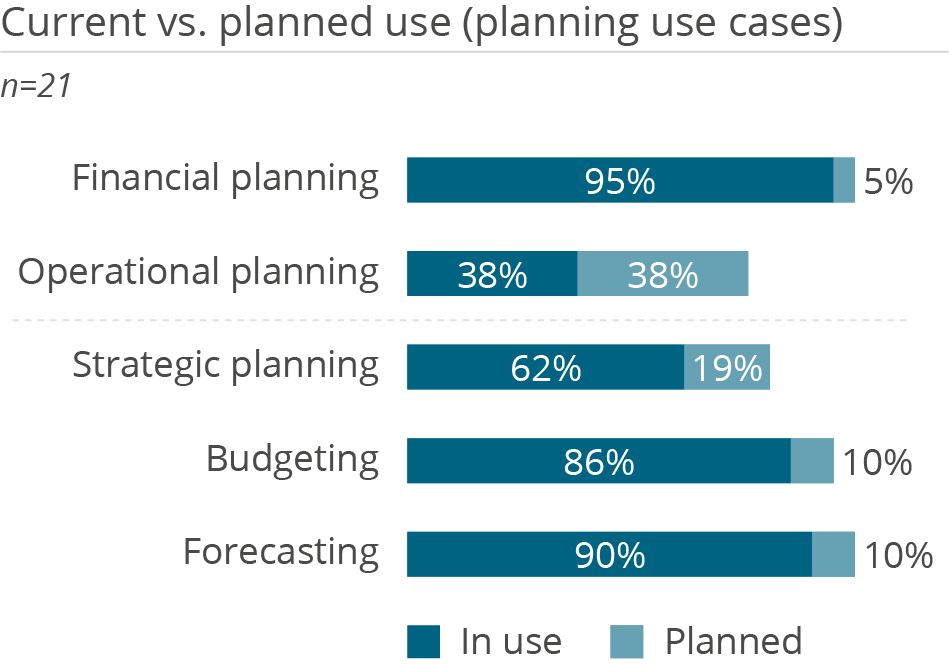
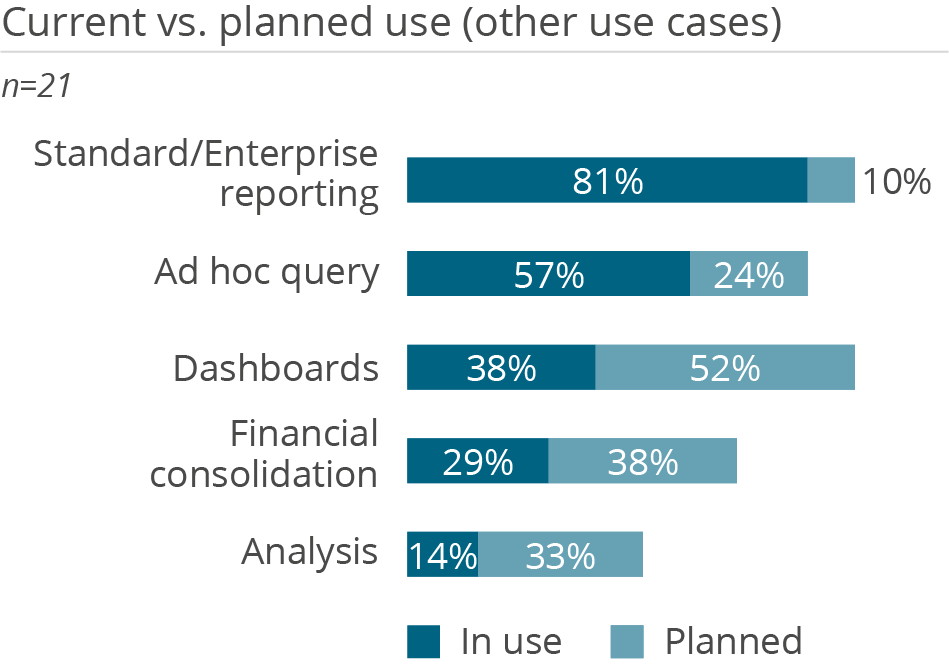
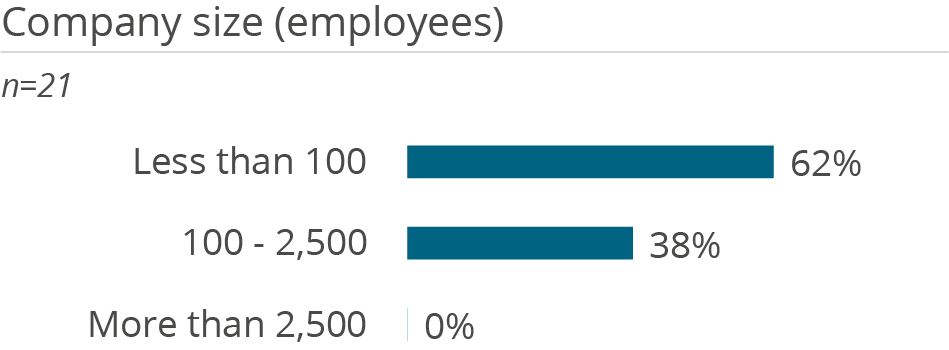
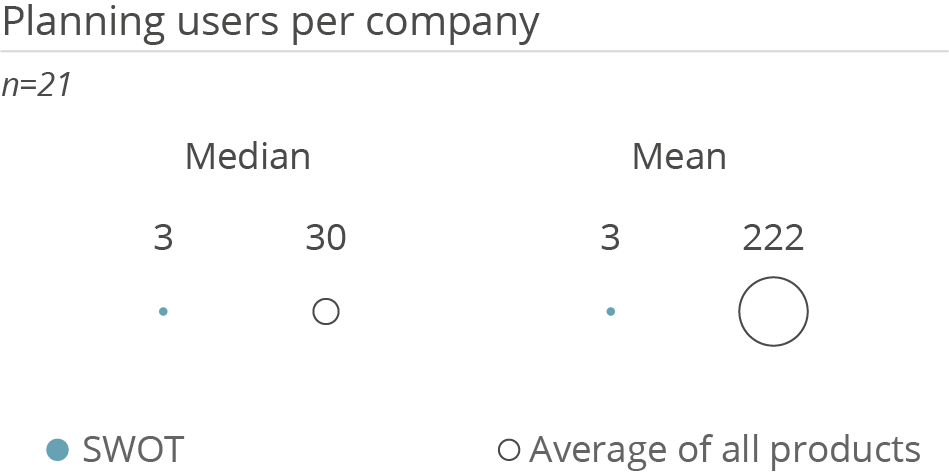
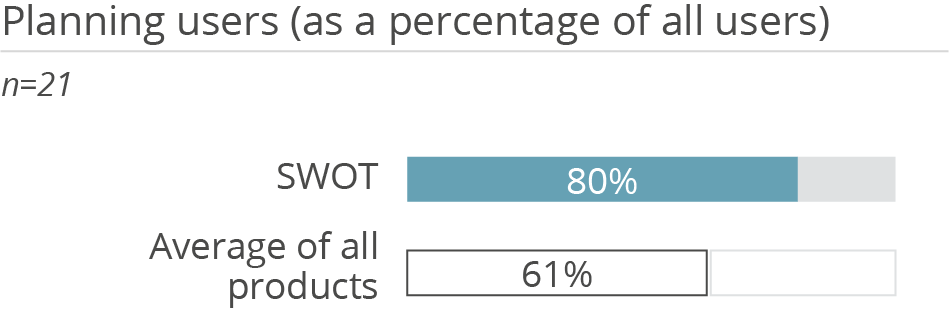
Who uses SWOT in a planning context and how
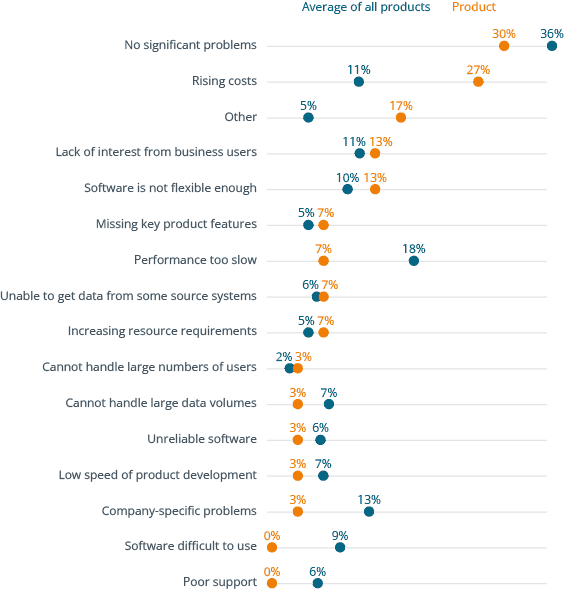
Why users buy SWOT and what problems they have using it
- Get independent information on software solutions, market developments and trends in data, analytics, business intelligence, data science and corporate performance management.
- Make data & analytics decisions based on numbers, data, facts and expert knowledge
- Access to all premium articles and all our research, including all software comparison studies, scores and surveys.
- Unlimited access to the BARC media library
- Consume unlimited content anywhere
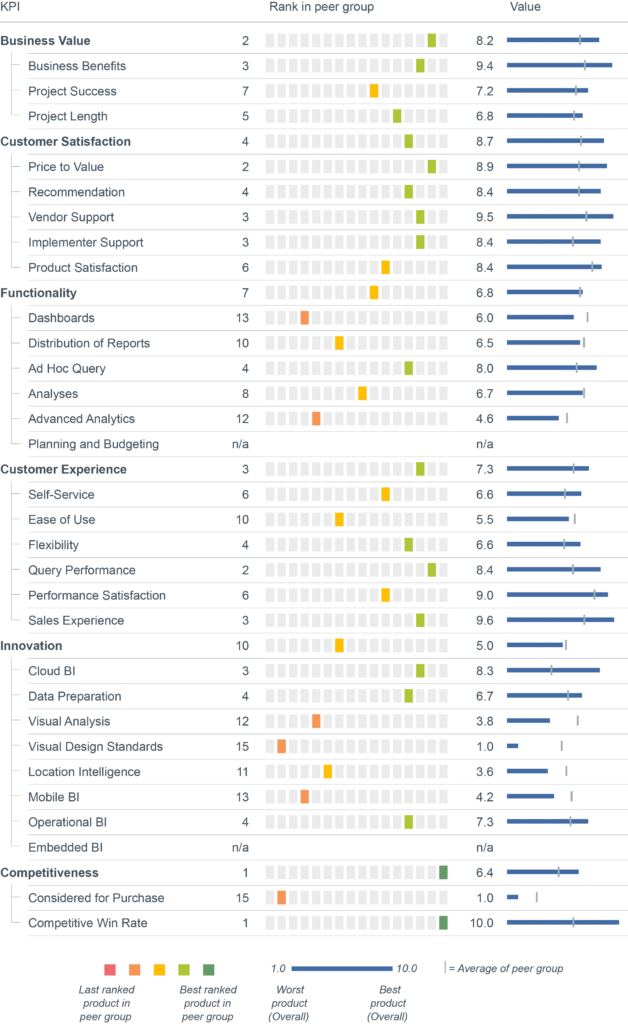
Full user reviews and KPI results for SWOT
All key figures for SWOT at a glance.
- Get independent information on software solutions, market developments and trends in data, analytics, business intelligence, data science and corporate performance management.
- Make data & analytics decisions based on numbers, data, facts and expert knowledge
- Access to all premium articles and all our research, including all software comparison studies, scores and surveys.
- Unlimited access to the BARC media library
- Consume unlimited content anywhere
Individual user reviews for SWOT
Number of employees
Industry
Source
What do you like best?
Hoher Automatisierungsgrad, vorkonfigurierte Vorlagen, Reporting-Modul.
What do you like least/what could be improved?
Wirtschaftsplan für weitere Bereiche (z.B. Klinken und Krankenhäuser).
What key advice would you give to other companies looking to introduce/use the product?
Ausreichend Zeit für Schulung und Einarbeitung.
How would you sum up your experience?
Allgemein sehr zufrieden.
Number of employees
Industry
Source
What do you like best?
Die individuelle Modifizierbarkeit.
What do you like least/what could be improved?
Komplexes Tool; die Berater sind manchmal nicht so kompetent, wie man es sich wünschen würde.
What key advice would you give to other companies looking to introduce/use the product?
Zeit mitbringen; ggf. SWOT das Gerüst erstellen lassen und dann nur noch zeigen lassen, wie man es fortan benutzt. (Gefahr: zu wenig Kenntnisse vom Backend bei SWOT.) SWOT würde es helfen, selber eine klar strukturierte Vorgehensweise zu verfassen, an der sich die Softwareberater heranhängen können und die den Kunden strukturiert Schritt für Schritt an das Programm heranführt.
How would you sum up your experience?
Reaktiver Support; sehr gut in den Führungspersonen besetzt.
Number of employees
Industry
Source
What do you like best?
Übersichtlich, logisch aufgebaut, deckt inhaltlich viel ab. Relativ einfache und zügige Einführung.
What do you like least/what could be improved?
Performance manchmal etwas schwerfällig (insbesondere wenn komplett durchgerechnet wird).
What key advice would you give to other companies looking to introduce/use the product?
Die eigenen Vorstellungen und Anforderungen an das System definieren. Einen Demo‑Termin buchen und in diesem die Anforderungen thematisieren sowie sich konkret die Umsetzung zeigen lassen.
How would you sum up your experience?
Insgesamt gut.
Number of employees
Industry
Source
What do you like best?
Kompatibilität zu vorgelagerten und nachgelagerten IT‑Systemen.
What do you like least/what could be improved?
Bedienung ist sehr komplex.
What key advice would you give to other companies looking to introduce/use the product?
Stufenweises Vorgehen.
How would you sum up your experience?
Sehr vielfältig und sehr flexibel.
Number of employees
Industry
Source
What do you like best?
Die Erreichbarkeit; Nähe zum Ansprechpartner; man kennt sich. Flexibilität des Produktes.
What do you like least/what could be improved?
Man muss viel selbst machen, finden und einrichten. Die Steuerplanung.
What key advice would you give to other companies looking to introduce/use the product?
–
How would you sum up your experience?
Gut!
Number of employees
Industry
Source
What do you like best?
Hohe Anpassungsfähigkeit, Detailtiefe der Daten und guter Support.
What do you like least/what could be improved?
Rechengeschwindigkeit; historische Daten sollten festschreibbar sein; Datenlogik manchmal schwer nachvollziehbar.
What key advice would you give to other companies looking to introduce/use the product?
Intensive Vorgespräche führen und Implementierungsservice nutzen, damit Aufwand und Zeit gespart werden.
How would you sum up your experience?
Insgesamt sehr gut; im Detail manchmal leider fehleranfällig; die Datenlogik muss man verstehen, um Fehler zu vermeiden.